
Submarine and Carbon to Sea launch the OAE Data Commons
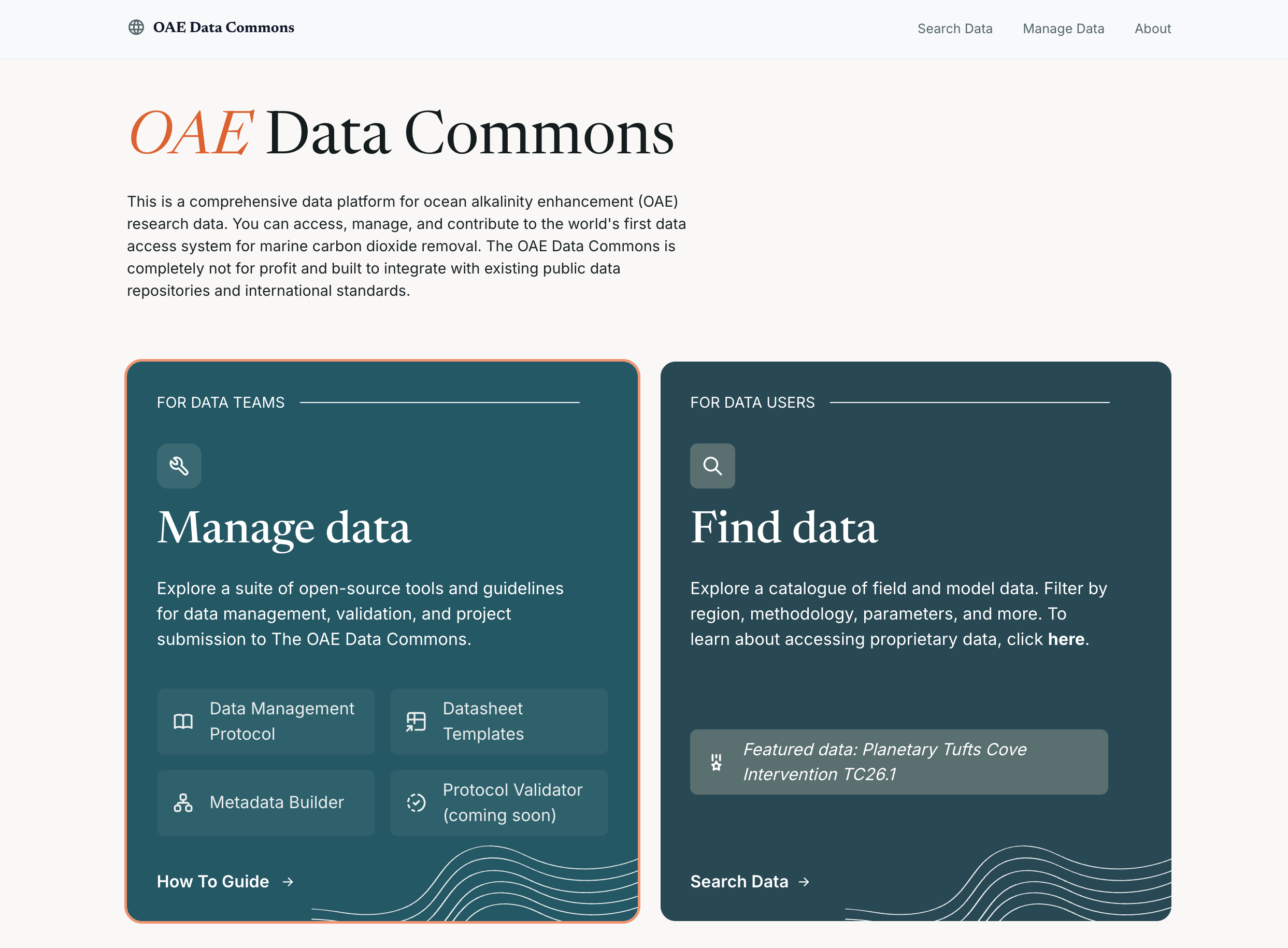
Submarine Scientific is excited to announce the launch of the OAE Data Commons, live at oaedata.org, providing shared infrastructure to make ocean alkalinity enhancement (OAE) research data easier to standardize, discover, access, and use.
Initiated and funded by the Carbon to Sea Initiative, the OAE Data Commons has been developed and implemented by Submarine Scientific, building on the community-developed OAE Data Management Protocol. Submarine has led development of the platform, metadata workflows, and governance systems that turn the OAE Data Management Protocol into practical infrastructure for OAE projects and researchers.
The launch brings together three connected components:
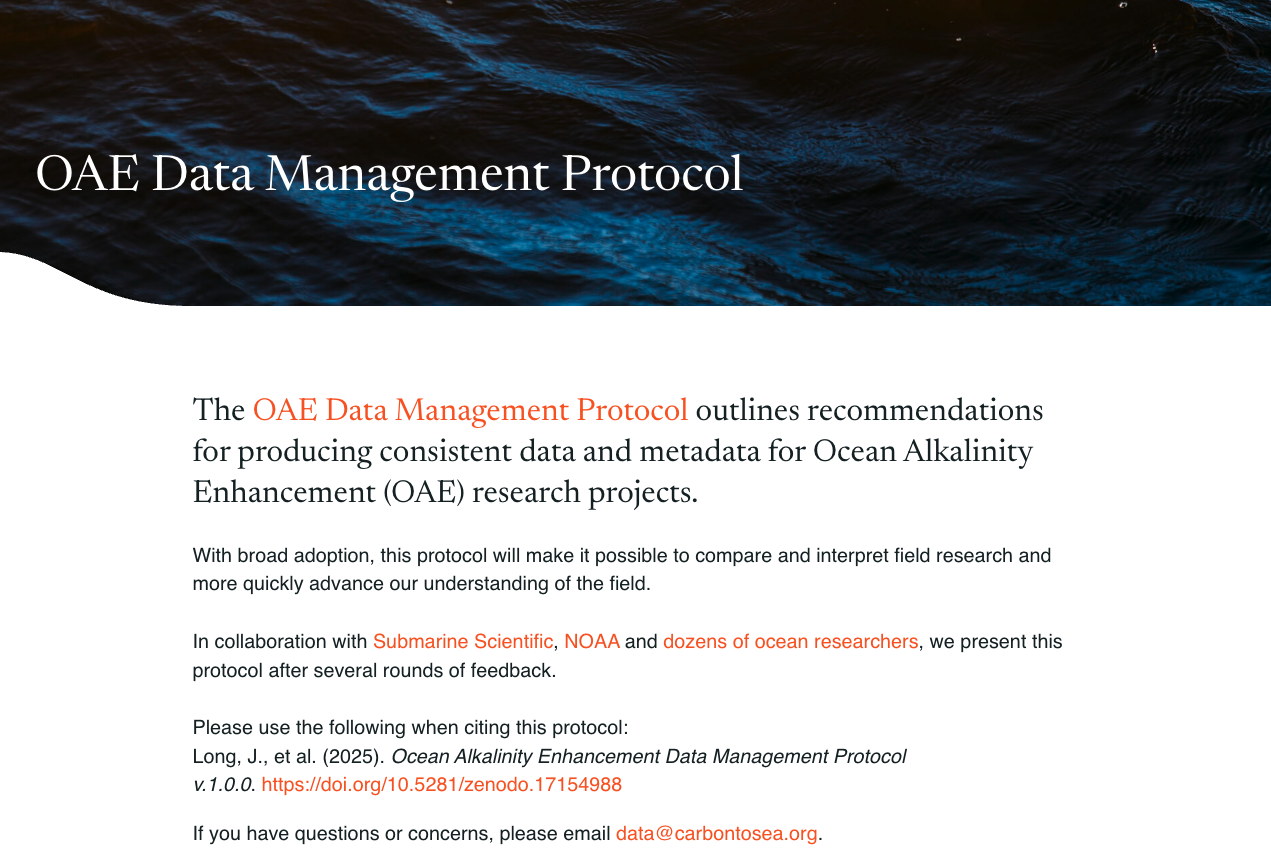
OAE Data Management Protocol:
A community-developed standard defining how OAE field projects should report and manage their data.
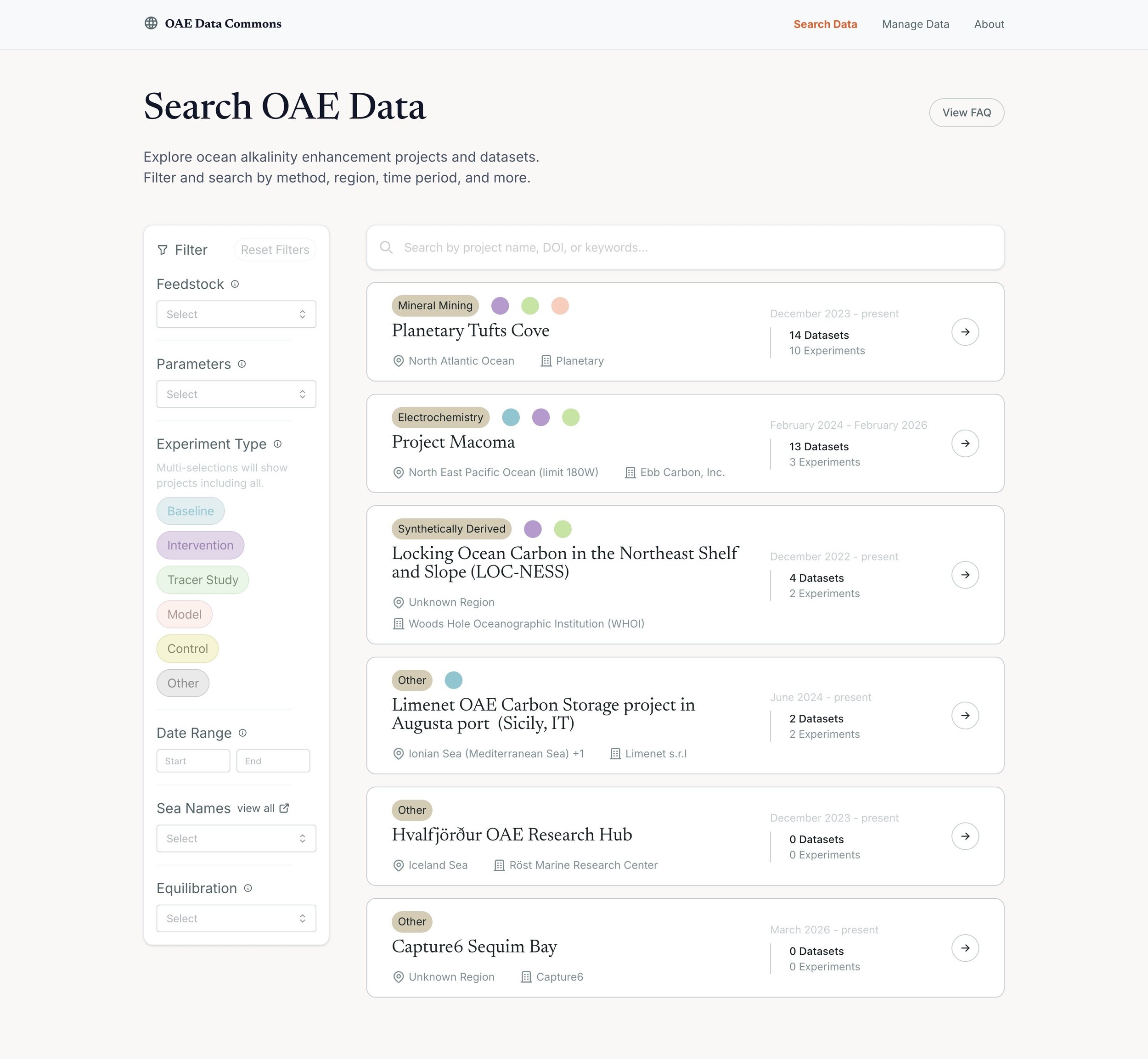
OAE Data Search:
A searchable registry of OAE research projects and datasets, allowing researchers and other stakeholders to explore project context, see what data are available, and identify whether projects meet the Protocol standard. Submarine also developed the data governance and access processes that allow researchers to request Conditional Access datasets that would otherwise remain siloed.
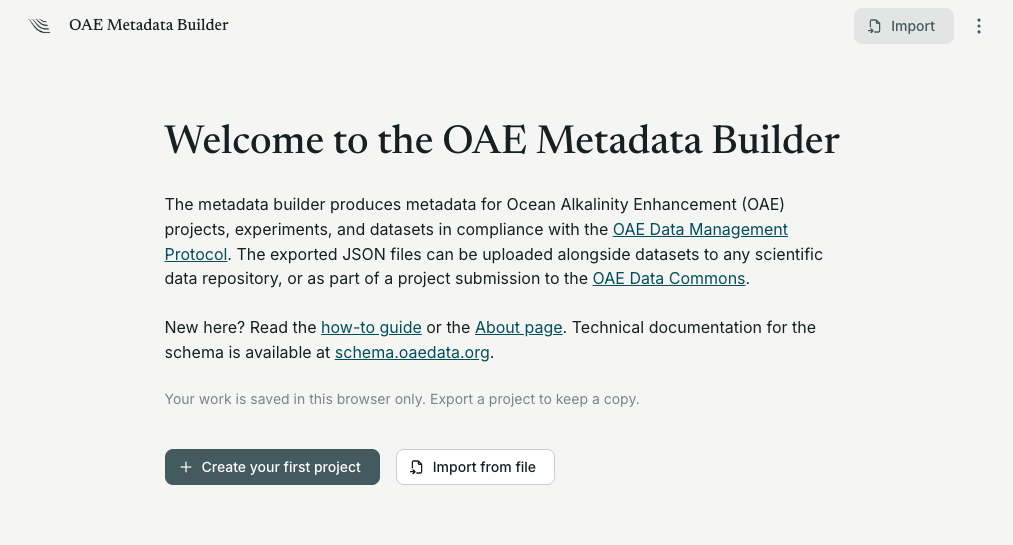
Metadata Builder:
A tool developed by Submarine to guide project teams through creating standardized project and dataset metadata aligned with the Protocol, reducing the burden of preparing data for the Commons.
Together, these tools translate a shared data standard into a working system for the OAE research community: making existing work easier to find and build on, reducing duplicated data-management effort across projects, and supporting more transparent and comparable OAE science.
For Submarine, the project reflects a broader focus on building the technical data and modeling infrastructure needed to support credible, interoperable marine carbon dioxide removal science and MRV.
